
Open Science in Practice for Coastal Ocean Data Analysis and Visualization
The course is organized by CMCC Foundation in the framework of MAGICA Project in collaboration with CoastPredict, the Programme endorsed by the UN Ocean Decade affiliated with UNESCO-IOC’s Global Ocean Observing System (GOOS)


This intensive, week-long training offers 20 students and early-career professionals and researchers a hands-on introduction to the practical implementation of Open Science principles through applied coastal ocean model and in situ and satellite observations data analysis and visualization on the cloud.
The program is highly practice-oriented and designed to show how Open Science concepts can be operationalized via cloud-native workflows tailored to participants’ own research datasets.
The course places a strong emphasis on Open Science practices and the FAIR principles, guiding participants in the development of reproducible, well-documented, and shareable research outputs. Using Jupyter notebooks and open-source tools, attendees will learn how to structure transparent and collaborative workflows that support data sharing, version control, and long-term reusability, in line with international best practices for sustainable scientific research.
The course is organised by CMCC Foundation in the framework of MAGICA Project.
MAGICA receives funding from European Union’s Horizon Europe, under grant agreement No. 101056920. Views and opinions expressed are those of the author(s) only and do not necessarily reflect those of the European Union or CINEA. Neither the EU nor CINEA can be held responsible for them.
The course combines lectures and hands-on sessions. The main topics include:
- Open Science and FAIR Principles.
- Overview of the UN Decade CoastPredict Programme and its implementation framework, GlobalCoast – an example of Open Science-driven international collaboration
- The Pangeo ecosystem, highlighting community-based tools for scalable and reproducible data analysis.
- Key technologies and tools for open data access, management, analysis, and visualization.
A final session will be dedicated to the presentation of participants’ assignments, fostering open discussion on results and lessons learned.
By the end of the week, participants will have gained practical experience in cloud-based coastal ocean models and observations data analysis and visualization within an Open Science framework, together with a solid understanding of FAIR data management, reproducibility, and the integration of Open Science principles into their everyday research workflows.
Moving beyond theoretical concepts, participants will:
- Develop reproducible workflows for running numerical models.
- Optimize and manage large-scale datasets following FAIR principles.
- Leverage open-source tools for transparent analysis and visualization.
- Apply Open Science best practices throughout their research activities.
Richard Signell – Director of the Course
Richard Signell is a physical oceanographic modeler and data scientist who worked 30+ years with the U.S. Geological Survey (USGS) at the Woods Hole Coastal and Marine Science Center. During his time at the USGS, his work involved using numerical models to study coastal processes like ocean circulation and sediment transport, and he promoted open-source tools for data accessibility as an active member of the Pangeo Community. He is now the founder of Open Science Computing, LLC, where he helps organizations learn how to implement cloud-native, open-source workflows to work effectively with large Earth data.

Giulia Galluccio – Director of the Course
Giulia Galluccio holds a degree in Business Administration from Bocconi University and a PhD in Science and Management of Climate Change from Cà Foscari University of Venice. She is Director of the Future Earth Research School and Director of CMCC Advanced Training and Education Center. She is a science policy analyst working at the interface of science, policy and society. She is currently Vice-Chair of the European Joint Initiative on Connecting Climate Knowledge for Europe, a pan-European intergovernmental initiative that brings together European countries to jointly coordinate climate research and fund new transnational research initiatives.
Fabrizio Antonio
Fabrizio Antonio is a Computer Scientist at the Advanced Digital Innovation Center (ADIC) of the Euro-Mediterranean Center on Climate Change (CMCC). His main research activities focus on data science, scientific and climate data management, cloud computing, container orchestration, and provenance management within the climate science domain. He has been involved in several European projects and initiatives, mainly within the framework of the European Open Science Cloud (EOSC), contributing to the design and development of architectural and software solutions for advanced computing and data analytics in research and innovation.
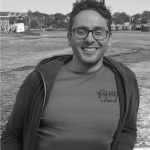
Francesco Trotta
Francesco Trotta is a Scientist at the GlObal Coastal Ocean division of the Euro-Mediterranean Center on Climate Change (CMCC), working on high-resolution ocean modelling and ocean dynamics. He has a PhD in Astronomy from the University of Florence.
He has worked at the University of Bologna from 2012 to 2022 developing an innovative relocatable ocean modelling platform to generate high resolution oceanic forecasts, called SURF (Structured and Unstructured Grid Relocatable ocean platform for Forecasting). He has taken part in several National and International projects including TESSA, MARISA, IMMERSE, Edito Model Lab. He has participated to several oceanographic campaigns to collect oceanographic data. He has been lecturer in different trainings regarding numerical ocean modelling and SURF platform.

Megi Hoxhaj
Megi Hoxhaj is a telecommunications engineer and technical lead at the CMCC Foundation, within the GOCO division. She oversees the design, coordination, and monitoring of operational data workflows and Decision Support Systems (DSS) for coastal and climate research. With a strong focus on system integration, team leadership, and project delivery, she ensures the reliability and efficiency of HPC-based oceanographic data pipelines and cloud platforms. Her experience spans cross-sector collaborations, including secure authentication systems and infrastructure monitoring in finance and retail environments.
Location
The course will be at the University Residential Center of Bertinoro (CE.U.B.).
Bertinoro is halfway between the cities of Forlì and Cesena, 6 km from SS9 (Via Emilia). Forlì is the town of reference for transport by train and bus to and from Bertinoro.
Food and Accommodation
The accommodation will be at the University Residential Center of Bertinoro. Please remember that participation in presence is mandatory.
The school will provide and offer lunches and dinners for all the participants. Participants are free to organize themselves at their own expense upon notice. The school will not cover any extra costs.
Transport
Nearest airport: Bologna airport “Guglielmo Marconi” (BLQ)
Nearest train station: Forlì Station (20 min. away from Bertinoro by car)
On how to get to the Centre, please check this link
Given that most of the participants will arrive in Bologna – especially from abroad – the school will organize a shuttle to bring participants from Bologna to Bertinoro. More details will be given to the selected candidates.
MAGICA aims to embody and promote equitable access to knowledge and is therefore committed to fostering inclusion and equal opportunities. Accordingly, MAGICA through the organizer CMCC Foundation will offer 20 scholarships for all 20 places available in the course.
The scholarships will cover the course fee, course materials, food and accommodation, the transfers from Bologna to Bertinoro on April 20, and from Bertinoro to Bologna on April 24, 2026.
The school will NOT cover any extra costs not mentioned above, including but not limited to costs for visa application or related costs, travel arrangements from or to the meeting place in Bologna/Bertinoro, regardless of the point of departure. Besides the two abovementioned transfers (one each way to and from Bertinoro), no other transfers will be organized.
General requirements
Our courses are designed for students, early-career researchers and professionals. See How to apply for more information.
Specific requirements
This Summer School is mainly geared towards Ph.D. students, early-career researchers and professionals in relevant fields (e.g. atmospheric science, climate science, oceanography, Earth system science, applied mathematics, and data science, with a strong interest in numerical modelling and AI/ML), particularly those whose work sits at the interface of machine learning and Earth system modeling and prediction.
Basic programming experience in Python is requested (e.g., numpy, scipy, matplotlib, xarray).