
AI and Machine Learning for Earth System Modeling and Prediction


The AI and Machine Learning for Earth System Modeling and Prediction summer school is designed for PhD students, early-career researchers and professionals eager to explore the forefront of machine learning (ML) and artificial intelligence (AI) applications in Earth system science. With the exponential growth in climate data and advances in computational methods, this course offers participants the opportunity to apply cutting-edge ML techniques to better understand, model, and predict the behavior of the Earth system.
Participants will gain hands-on experience with state-of-the-art AI and ML methods—ranging from deep learning and generative models to hybrid physical–ML approaches and uncertainty quantification—applied to the unique challenges of complex dynamical systems such as the atmosphere, ocean, and cryosphere.
This course is designed to address the following topics:
- Foundations of Machine Learning for Geoscience
- Earth System Data and ML Workflows
- Physics-Informed and Hybrid ML Models
- Generative and Sequence Modeling in Climate Applications
- Causal Inference and Model Interpretability
- Uncertainty Quantification and ML-Based Data Assimilation
- Data Management, Parallel Data Analytics and Provenance in Workflows
- Capstone Projects and Hackathon
The course is organised by CMCC Foundation in the framework of MAGICA Project.
MAGICA receives funding from European Union’s Horizon Europe, under grant agreement No. 101056920. Views and opinions expressed are those of the author(s) only and do not necessarily reflect those of the European Union or CINEA. Neither the EU nor CINEA can be held responsible for them.
By the end of the course, participants will:
- Understand state-of-the-art ML/AI methods and how to tailor them for climate and Earth system applications
- Gain experience building, training, running, and validating ML models with real Earth science data
- Learn how the scientific community has integrated ML with physical models and interpret these results in a geoscientific context
- Collaborate with peers and mentors to solve practical problems at the intersection of AI and climate
Aneesh Subramanian – Director of the Course
Aneesh Subramanian earned his Ph.D. in 2012 from Scripps Institution of Oceanography and completed a post-doc there from 2012-2014. He was a Post-Doctoral Research Scientist and Lecturer at the University of Oxford (2014-2017), focusing on advanced weather modeling techniques and their impact on predictability of El Niño, the Madden-Julian Oscillation, tropical cyclones, and atmospheric rivers. He joined the Center for Western Weather and Water Extremes in 2017 as a Project Scientist, enhancing subseasonal prediction and data assimilation for Western US weather. In 2019, he became an Assistant Professor at the University of Colorado Boulder, researching on prediction of our earth system from weather to climate timescales and improving our understanding of climate processes. He has over 90 refereed publications.
His research covers climate processes, global and regional weather and climate prediction, coupled ocean-atmosphere data assimilation and the application of advanced machine learning techniques in prediction and Earth system modeling. He also studies the predictability of global weather systems, and atmospheric rivers on medium-range to sub-seasonal timescales and oceanic influences on prediction in these timescales using both computational models and observational analysis. He is also focused on improved understanding of the physical processes and their representation in computer models for helping improve the predictions.
William Chapman – Director of the Course
William Chapman is a Project Scientist at the National Center for Atmospheric Research (NCAR) in Boulder, Colorado, working in the Climate & Global Dynamics Group. His research focuses on improving climate and weather predictions by integrating machine learning with traditional climate models. He specializes in subseasonal forecasting, dynamic drivers of climate modes of variability, and error representation within climate models.
His work involves improving the predictability of weather systems, including teleconnection patterns. He aims to enhance forecast skill on medium-range to subseasonal timescales. His research uses a combination of machine learning, computational modeling, and observational analysis to refine our understanding of these processes and improve the representation of physical systems in predictive models.
He earned his Ph.D. in Atmospheric Science from the Scripps Institution of Oceanography. He has held a post-doctoral fellowship at NCAR’s Advanced Studies Program and contributed to the Multiscale Machine Learning (M2lines) project. His work continues to explore the intersection of data-driven methods and traditional climate science, with the goal of enhancing forecasts and deepening our understanding of sources of predictability for extreme weather events.
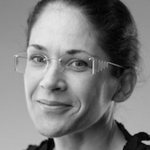
Laure Berti-Equille
Laure Berti-Equille is a Research Director (DR1) at IRD, the French Research Institute for Sustainable Development. Before, she was a Full Professor in Computer Science at Aix-Marseille University in France (2017-2018), a senior scientist at Qatar Computing Research Institute in Qatar (2014-2017), an associate professor at University of Rennes 1 in France (2000-2010), and a 2-year visiting researcher at AT&T Labs Research in New Jersey, USA (2007-2009), as a recipient of the prestigious European Marie Curie Outgoing Fellowship. In 2022, she was a visiting scientist at Massachusetts Institute of Technology, LIDS (Laboratory for Information & Decision Systems). Her current research interests are on the inter-play of data management, data analytics, and machine learning with a focus on anomaly detection, data cleaning/preparation, multimodal learning and uncertainty quantification with main applications in medical and environmental domains in-line with SGDs. She is co-leading the international joint lab IDEAL with the Federal Univ. of Paraíba (Brazil) dedicated to AI for Agroecology. She has given many tutorials and keynote talks on data analytics and applied machine learning and recently published a new book on AI for SDGs.
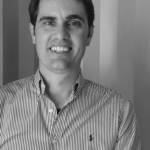
David Lavers
David Lavers is based at the European Centre for Medium-Range Weather Forecasts (ECMWF) where he has been working for over 10 years on ECMWF model diagnostics and evaluation and climate monitoring activities. His work focuses on the global water cycle, which includes using data from observational campaigns such as Atmospheric River Reconnaissance. He has held previous positions at Scripps Institution of Oceanography, the University of Iowa, the University of Reading, and Princeton University. His PhD on seasonal hydrological prediction was from the University of Birmingham and the Centre for Ecology and Hydrology in the UK.
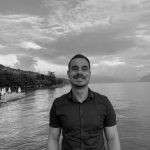
Tom Beucler
Tom Beucler is an assistant professor of environmental data science at the University of Lausanne, Switzerland. He leads the Data-Driven Atmospheric & Water Dynamics (∂3AWN) laboratory, the first research group worldwide dedicated to bridging atmospheric physics and AI. Tom holds a Ph.D. in atmospheric science from MIT, where he studied tropical convection. His postdoctoral work at Columbia University and UC Irvine focused on deep learning for climate modeling.
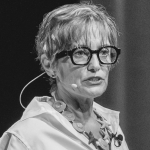
Annalisa Bracco
Annalisa Bracco is a Senior Scientist at the Euro-Mediterranean Center on Climate Change (CMCC). She has an extensive background in computational fluid dynamics, physical oceanography and climate dynamics, and her research interests include ocean transport, climate dynamics and carbon and oxygen cycling in the climate system. In the last few years her group has adapted or developed novel methodologies that build upon dynamical system theory, machine learning and network analysis to investigate ocean connectivity and the interactions among modes of climate variability. Before joining CMCC in 2025, she was Professor at the Georgia Institute of Technology where she co-founded the PhD program in Ocean Science and Engineering. She received a PhD in geosciences from the University of Genoa and was a postdoctoral fellow at the Woods Hole Oceanographic Institution and at the International Center for Theoretical Physics.
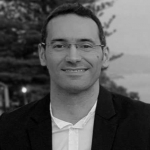
Donatello Elia
Donatello Elia is a computer scientist at the Advanced Digital Innovation Center (ADIC) of the CMCC Foundation, which he joined in 2013. Currently, he leads the Data Science & Digital Research Infrastructures unit in ADIC. He holds a PhD degree in Engineering of Complex Systems and a M.Sc. degree in Computer Engineering, both from the University of Salento, Italy. His main research interests include data science, cloud computing, data-intensive analytics, scientific data management and machine learning in climate science.

Marco De Carlo
Marco De Carlo is a Junior Associate Scientist and member of the machine learning research group at the Advanced Digital Innovation Center (ADIC) of CMCC. He received his Bachelor’s and Master’s degrees in Computer Engineering from the University of Salento, specializing in Artificial Intelligence and High Performance Computing. His research focuses on the development of machine learning methodologies for scientific and environmental computing, with emphasis on advancing numerical simulations and data-driven modeling. His work spans Bayesian optimization, deep learning, LLM, and hybrid modeling frameworks, alongside MLOps and scalable machine learning pipelines for reproducible AI systems. His broader interests include the integration of machine learning with physical and numerical models for Earth system applications, with a focus on improving predictive understanding and decision-support in complex environmental systems.
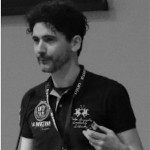
Sandro Fiore
Sandro Fiore is an Associate Professor at the Department of Information Engineering and Computer Science (DISI) of the University of Trento, where he leads the High Performance Climate Informatics Laboratory, and a lecturer at the School of Innovation (Trento). At the University of Trento, he teaches Software Engineering and High Performance Computing for Data Science within the DISI Department. At the School of Innovation, he delivers short courses on Data Science, GreenOps, Data Governance, and Business Analytics.
His research activity focuses on scientific data management, data science and machine learning, end-to-end workflows, and provenance for climate change applications in extreme-scale HPC, distributed, and cloud environments.
He has been a Visiting Scientist at the Lawrence Livermore National Laboratory (LLNL), working in the context of the Earth System Grid Federation (ESGF), and at the University of Chicago, where he conducted research on provenance and computational reproducibility.
He is the Principal Investigator of yProv, an open-source software ecosystem compliant with W3C PROV standards for provenance management in scientific workflows.
He is the author of more than 100 scientific publications, editor of the book Grid and Cloud Database Management, and co-author of The International Exascale Software Project Roadmap. He is a member of both the ACM and the IEEE.
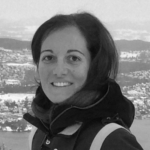
Donata Giglio
Donata Giglio is an Assistant Professor in the Department of Atmospheric and Oceanic Sciences (ATOC) at the University of Colorado Boulder. Her research interests mainly lie in large scale ocean circulation, upper ocean processes and climate dynamics. She also works on improving uncertainty quantification of gridded oceanic fields and in improving ocean data accessibility and visualization via argovis.colorado.edu. She co-chairs the IAPSO best practice study group MapEval4OceanHeat and she is a member of the AMS Committee on Air-Sea Interaction and the UCAR Membership Committee.

David Hall
David M. Hall is a Senior Data Scientist and Solution Architect at NVIDIA. Dr. Hall obtained his Ph.D in Theoretical Physics from the University of California, Santa Barbara in 2007. He has worked as a Research Professor in Computer Science at the University of Colorado, Boulder and as a Scientist at the National Center for Atmospheric Research. He has a broad technical background in artificial intelligence, climate-model development, software engineering, and remote sensing. His current focus is NVIDIA’s Earth-2 Initiative which aims to build a Digital Twin of the Earth to predict and prepare for the impacts of climate change.
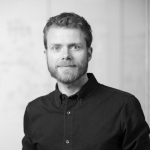
Pierre Gentine
Pierre Gentine, a Professor of Geophysics in the Department of Earth and Environmental Engineering and Professor of Earth and Environmental Sciences and of Climate at Columbia University, focuses his research on understanding and predicting changes in the global water and carbon cycles in the context of rising CO2 concentrations. He employs a multiscale modeling approach, combining data from various sources including in situ measurements, remote sensing, and high-resolution turbulent simulations. Gentine’s work aims to improve our understanding of land-atmosphere interactions, drought forecasting, and the impact of climate change on agricultural production.

Mike Sierks
Mike Sierks is a product builder and Ph.D. climate scientist focused on developing AI-powered tools for weather, climate, and the energy transition. Currently at WindBorne Systems, he combines scientific expertise with applied machine learning to transform complex environmental data into practical products and decision-ready insights. His work has included research on high-resolution climate projections for wind-energy planning, helping investors and energy-sector stakeholders better understand how a changing climate may affect future renewable-energy performance. Mike is especially interested in building tools that connect rigorous climate science with real-world action.
Location
The course will be at the University Residential Center of Bertinoro (CE.U.B.).
Bertinoro is halfway between the cities of Forlì and Cesena, 6 km from SS9 (Via Emilia). Forlì is the town of reference for transport by train and bus to and from Bertinoro.
Food and Accommodation
The accommodation will be at the University Residential Center of Bertinoro. Please remember that participation in presence is mandatory.
The school will provide and offer lunches and dinners for all the participants. Participants are free to organize themselves at their own expense upon notice. The school will not cover any extra costs.
Transport
Nearest airport: Bologna airport “Guglielmo Marconi” (BLQ)
Nearest train station: Forlì Station (20 min. away from Bertinoro by car)
On how to get to the Centre, please check this link
Given that most of the participants will arrive in Bologna – especially from abroad – the school will organize a shuttle to bring participants from Bologna to Bertinoro. More details will be given to the selected candidates.
The course fee is €1800 per person. A 22% VAT will have to be added to the course fee, unless you fall under an exempt category.
The course fee includes accommodation and meals during the course delivery, access to all course activities, and transfers from the designated meeting point (see Logistical information) to the course venue on the first and last day of the course.
Upon successful completion of all activities, participants will receive a certificate at the end of the course.
A 15% discount is available for FERS School Alumni (participants from the past two years).
The School will NOT cover any additional costs not explicitly mentioned above, including but not limited to visa application fees or related expenses, medical or travel insurance, and travel arrangements to and from the meeting point or course venue, regardless of the point of departure. Aside from the two transfers mentioned above (to and from the course venue), no additional transfers will be organized.
By registering for a course organized by the Future Earth Research School, participants acknowledge that they have read and understood the FERS cancellation policy.
The School offers limited financial assistance covering the course fee and the services included therein.
We are committed to fostering inclusion and equal opportunities. Financial assistance is available to participants who may otherwise face barriers to accessing the course.
To apply, applicants must include a statement in the motivation letter within the application form, explaining why they should be considered for financial assistance. Grants are awarded by the Future Earth Research School based on the information provided and the overall application. Meeting the eligibility criteria or expressing interest does not guarantee the award of financial assistance.
All applicants will be notified upon completion of the selection process. Successful candidates will receive a confirmation email from secretariat@fersschool.it. Where granted, financial assistance will be explicitly stated in the notification.
The decision of the selection committee is final and not subject to appeal. The School is unable to provide individual feedback on applications and reserves the right not to award financial assistance.
Two scholarships are offered by HPC-TRES.
General requirements
Our courses are designed for students, early-career researchers and professionals. See How to apply for more information.
Specific requirements
This Summer School is mainly geared towards Ph.D. students, early-career researchers and professionals in relevant fields (e.g. atmospheric science, climate science, oceanography, Earth system science, applied mathematics, and data science, with a strong interest in numerical modelling and AI/ML), particularly those whose work sits at the interface of machine learning and Earth system modeling and prediction.
Basic programming experience in Python is requested (e.g., numpy, scipy, matplotlib, xarray).